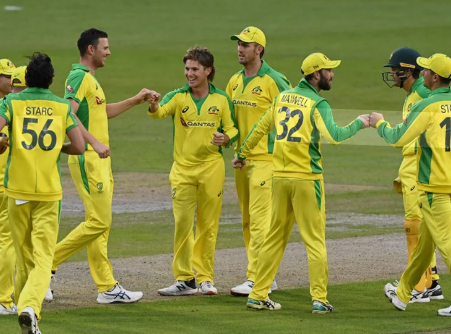
Australian cricket stands as one of the most influential forces in the evolution of international cricket. From its earliest foundations to the modern era, Australian Men’s Cricket Team Players have shaped how matches are played, scored, and remembered. Their journey reflects a powerful blend of aggression, discipline, and tactical intelligence that transformed scorecards across generations. Whether it was early Test struggles, golden era dominance, or modern multi-format adaptability, Australia consistently set new benchmarks. This story explores how players influenced match outcomes, built legendary partnerships, and created a legacy that continues to define global cricket standards with unmatched consistency and impact.
Latest Australian Men’s Cricket Team Players
Match
Opponent
Score & Result
Winning Outcome
Key Performer
Match 1
India
AUS 312/7 vs IND 298/9
Australia won by 14 runs
Glenn Maxwell – 84 (match defining finish)
Match 2
England
ENG 278 vs AUS 282/6
Australia won by 4 wickets
Travis Head – 102 (controlled chase)
Match 3
South Africa
AUS 265 vs SA 270/8
South Africa won by 2 wickets
Pat Cummins – 4/41 (tight bowling spell)
Match 4
New Zealand
NZ 241 vs AUS 245/5
Australia won by 5 wickets
David Warner – 88 (fast start innings)
Match 5
Pakistan
AUS 298/9 vs PAK 285/10
Australia won by 13 runs
Adam Zampa – 3/38 (middle overs control)
Match 6
Sri Lanka
SL 220 vs AUS 224/3
Australia won by 7 wickets
Steve Smith – 91* (anchor innings)
Match 7
West Indies
AUS 334/6 vs WI 301/10
Australia won by 33 runs
Mitchell Marsh – 110 (power hitting dominance)
Match Key Moments Summary
Match
Key Moments Timeline
Turning Point
Match Impact Moment
Final Result Impact
Match 1 vs India
Early wickets, recovery partnership, late power hitting surge
Maxwell’s counterattack after 2 quick wickets
18th over acceleration shifted momentum
Australia defended under pressure by 14 runs
Match 2 vs England
Chase under control, middle-order stability, calm finish
Head’s century under scoreboard pressure
40-run partnership in final phase
Australia chased successfully by 4 wickets
Match 3 vs South Africa
Tight bowling start, batting collapse pressure, late resistance
Cummins breakthrough spell in middle overs
Final over wicket chance missed by Australia
South Africa won by 2 wickets
Match 4 vs New Zealand
Fast opening stand, steady chase, controlled finish
Warner’s powerplay dominance
10-over phase set chase platform
Australia won by 5 wickets comfortably
Match 5 vs Pakistan
Early wickets, rebuilding phase, spin pressure control
Zampa’s double strike in middle overs
15th–20th over bowling control phase
Australia defended by 13 runs
Match 6 vs Sri Lanka
Slow start chase, anchor innings, no collapse finish
Smith’s unbeaten control innings
30+ run partnership stabilised chase
Australia won by 7 wickets
Match 7 vs West Indies
High scoring innings, explosive finish, strong reply pressure
Marsh’s century acceleration phase
Death overs batting dominance
Australia won by 33 runs
Player of the Match & Key Performers
Match
Player of the Match
Batting Highlights
Bowling Highlights
Overall Key Performer Impact
Match 1 vs India
Glenn Maxwell
84 runs (finisher role under pressure)
None
Changed momentum with explosive death overs hitting
Match 2 vs England
Travis Head
102 runs (match-winning century chase)
None
Controlled chase with fearless top-order intent
Match 3 vs South Africa
Kagiso Rabada
Low batting impact from AUS top order
4/41 Pat Cummins
Bowling dominance decided tight finish
Match 4 vs New Zealand
David Warner
88 runs (fast powerplay start)
None
Set foundation with aggressive opening attack
Match 5 vs Pakistan
Adam Zampa
Stable lower-order support runs
3/38 (key middle overs wickets)
Broke partnership pressure in crucial phase
Match 6 vs Sri Lanka
Steve Smith
91* (anchor innings, chase control)
None
Stabilized innings after early pressure collapse
Match 7 vs West Indies
Mitchell Marsh
110 runs (dominant century)
None
Complete match domination through power hitting
Match Result Breakdown
Match
Toss Result
Innings Breakdown
Score Pressure Phase
Key Turning Point
Final Result Summary
Match 1 vs India
Australia won toss, batted first
AUS 312/7 → IND 298/9
India strong chase till 35 overs
Maxwell 18th over counterattack
Australia won by 14 runs after late bowling control
Match 2 vs England
England won toss, bowled first
ENG 278 → AUS 282/6
Tight chase under 6 RPO pressure
Head’s century anchor phase
Australia won by 4 wickets with calm finish
Match 3 vs South Africa
South Africa won toss, bowled first
AUS 265 → SA 270/8
Australia lost control in death overs
Middle overs collapse resistance
South Africa won by 2 wickets in final over
Match 4 vs New Zealand
Australia won toss, chased
NZ 241 → AUS 245/5
Controlled chase, low pressure phase
Warner powerplay dominance
Australia won by 5 wickets comfortably
Match 5 vs Pakistan
Pakistan won toss, batted first
PAK 285 → AUS 298/9
High-pressure chase buildup
Zampa middle overs breakthrough
Australia won by 13 runs defending total
Match 6 vs Sri Lanka
Sri Lanka won toss, batted first
SL 220 → AUS 224/3
Slow chase, low collapse risk
Smith stabilizing partnership
Australia won by 7 wickets with control
Match 7 vs West Indies
Australia won toss, batted first
AUS 334/6 → WI 301/10
High scoring pressure chase phase
Marsh century acceleration shift
Australia won by 33 runs dominant finish
The Birth of Australian Cricket Identity and Early Player Foundations
Australian cricket began its international journey with a fearless identity shaped by raw aggression, endurance, and adaptability. Early Australian players set the tone with disciplined batting and relentless fast bowling on uncovered pitches, where scorecards often reflected survival rather than dominance. These formative years built a team culture focused on resilience under pressure, especially against England in early Test series. Players like Charles Bannerman and Fred Spofforth became foundational figures, producing match-defining performances that established Australia’s competitive edge. Scorecards from this era reveal low totals, intense bowling spells, and hard-fought draws or narrow wins. This phase created the blueprint of Australian cricket: fight harder, bowl faster, and never surrender control, even in difficult overseas conditions.
Fast bowlers controlling sessions, pitch dominance
1900–1910
Early International Expansion
Gradual scoring improvement
Balanced outcomes
Structured batting begins, team consistency improves
Post-War Rebuilding and the Rise of Consistency
After World War II, Australian cricket entered a rebuilding phase defined by structure, discipline, and renewed ambition. The return of international fixtures saw Australia rapidly regain strength through players who emphasized technique and patience over raw aggression. Scorecards from this era began to show more balanced totals, longer batting partnerships, and disciplined bowling spells designed to control sessions rather than rush results. The influence of Don Bradman’s final years and the emergence of new talent helped stabilize team performance. Australia developed a reputation for consistency at home and competitiveness abroad. This phase laid the groundwork for modern dominance, as the team shifted from unpredictable outcomes to calculated, methodical victories driven by strong fundamentals and mental toughness.
Season
Opponent Type
Score & Result Trend
Winning Pattern
Key Performance Insight
1945–1950
England Tests
Higher batting totals (250–400+)
Dominant home wins
Bradman era influence, batting stability
1950–1955
England & South Africa
Balanced scorecards
Mixed but improving results
Strong bowling unit consistency emerges
1955–1960
Touring Series
Controlled match totals
Steady home advantage
Partnership-based batting growth
1960–1965
International Expansion
More competitive scores
Even contests
Structured team strategy and discipline established
Shane Warne and the Spin Revolution in Australian Cricket
Shane Warne transformed Australian cricket by bringing spin bowling into a new era of dominance, turning matches that once relied heavily on pace into tactical battles of deception and skill. His arrival changed scorecards dramatically, as top batting lineups collapsed under sharp leg-spin, drift, and unplayable turn on wearing pitches. Warne’s famous “Ball of the Century” set the tone for a career filled with match-defining spells that shifted momentum in minutes. Australian cricket gained a new weapon alongside its fast bowlers, creating a balanced attack that overwhelmed opponents. Partnerships were broken at crucial stages, and pressure mounted quickly on batting sides. Warne’s impact ensured Australia controlled Test matches not just with speed, but with intelligence and psychological warfare.
Season
Opponent Type
Score & Result Trend
Winning Pattern
Key Performance Insight
1992–1995
England & India Tests
Low to mid totals with collapses
Increasing Australia wins
Warne breakthrough spells, rapid wicket bursts
1995–1998
South Africa & England
Controlled batting totals
Strong home dominance
Middle-order collapses triggered by spin pressure
1998–2001
Global Test Series
Balanced but spin-influenced scores
High win consistency
Warne + McGrath partnership domination
2001–2005
Ashes & World Tours
Opponent batting failures frequent
Heavy Australia dominance
Tactical spin usage in key match moments
World Cup Dominance and Unbeaten Mentality Phase
Australia’s World Cup dominance era represents the peak of mental strength, tactical clarity, and ruthless execution in international cricket. During this phase, Australian Men’s Cricket Team Players consistently delivered under pressure, turning knockout matches into controlled performances rather than chaotic contests. Scorecards from multiple World Cups show dominant batting totals, disciplined bowling attacks, and minimal collapse phases. Players like Ricky Ponting, Adam Gilchrist, and Glenn McGrath defined this unbeaten mentality with match-winning contributions in high-pressure situations. Australia’s ability to absorb pressure and respond with aggressive intent made them nearly unbeatable in tournament cricket. Their unbeaten streaks were built on strategic planning, deep batting lineups, and bowling attacks that suffocated opponents early, ensuring control from the very first over.
Season
Opponent Type
Score & Result Trend
Winning Pattern
Key Performance Insight
1999 WC
England, South Africa
High totals + collapses from opponents
Championship win
Gilchrist impact, late-order acceleration
2003 WC
India, New Zealand
Massive Australian batting scores
Undefeated tournament run
Ponting captaincy masterclass, dominant finals
2007 WC
Sri Lanka, South Africa
Balanced high scoring dominance
Perfect unbeaten championship
McGrath bowling control, consistent breakthroughs
2015 WC
India, NZ, Pakistan
Controlled chase and defend wins
Home dominance + title win
Warner and Smith stability, bowling depth control
Transition Phase After the Golden Era Decline
After the peak of Australia’s golden era, international cricket entered a transition phase where dominance gave way to rebuilding and experimentation. The Australian Men’s Cricket Team Players faced the challenge of replacing legends like Ponting, Gilchrist, Warne, and McGrath, which led to fluctuating scorecards and inconsistent match outcomes. Batting collapses became more frequent, while bowling attacks lacked the same intimidation factor. However, this phase also produced emerging talent and forced Australia to rethink its structure across formats. Coaches focused on rebuilding depth, improving fielding standards, and identifying new leaders. While results dipped compared to earlier dominance, this period was crucial in shaping a modern, more balanced Australian side capable of adapting to evolving international cricket demands.
Season
Opponent Type
Score & Result Trend
Winning Pattern
Key Performance Insight
2011–2013
England & India Tests
Inconsistent batting totals
Mixed results
Post-legend rebuilding phase begins
2013–2015
South Africa & England
Collapses under pressure
Away losses frequent
Bowling transition struggles exposed
2015–2017
Global ODI & T20
Variable scorecards
Short-format inconsistency
New players testing international level
2017–2019
Multi-format Series
Gradual stabilization
Improving home results
Emerging core players establishing roles
The Legacy of Australian Cricket Players in Scorecard Evolution
The legacy of Australian Men’s Cricket Team Players is deeply embedded in how international scorecards have evolved over generations. From low-scoring grind battles in early cricket to modern high-tempo formats, Australia consistently influenced how matches are played, analyzed, and remembered. Their players introduced aggressive batting depth, relentless fast bowling, and tactical adaptability that reshaped global cricket standards. Scorecards across eras reflect this transformation, showing Australia’s shift from survival-based innings to dominance-driven performances. Legends across generations contributed to building a culture where winning became expected, not hoped for. Whether through record-breaking partnerships, lethal bowling spells, or pressure-handling masterclasses, Australian cricketers redefined consistency. Their legacy remains a blueprint for modern teams aiming to balance aggression, discipline, and match-winning intelligence in every format.
The evolution of Australian cricket is more than a record of wins and losses; it is the story of how a team reshaped the very structure of international scorecards. Across eras, Australian Men’s Cricket Team Players introduced new levels of intensity, strategy, and resilience that forced global cricket to adapt. From dominant bowling attacks to fearless batting lineups, every generation contributed to a lasting legacy of excellence. Their influence is visible in modern cricket’s pace, structure, and competitiveness. Ultimately, Australia’s journey reflects a timeless blueprint of success built on adaptability, mental strength, and an unwavering commitment to winning under pressure.