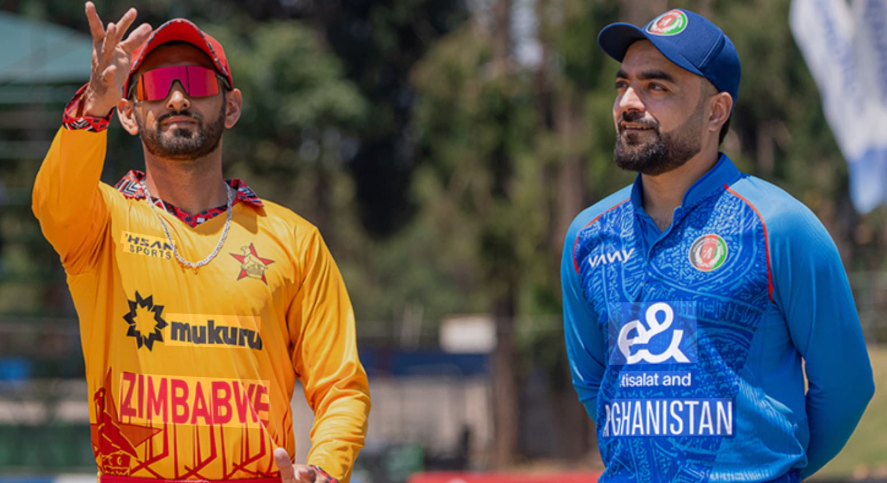
The encounters between the two teams have developed into a fascinating timeline in modern cricket, shaped by shifting momentum, tactical battles, and growing competitive respect. What began as uneven contests gradually turned into closely fought clashes where every over carried importance. The journey reflects the rise of one side as a powerful emerging force and the resilience of the other fighting to stay relevant on the global stage. Across different formats, matches have delivered intense bowling spells, pressure driven batting performances, and crucial turning points that defined outcomes. This rivalry now stands as a symbol of evolving international cricket dynamics.
Latest Matches Table
Match
Date
Format
Venue
Winner
Margin
Match 1
20 October 2025
Test
Harare
Zimbabwe
Innings and 73 runs
Match 2
29 October 2025
T20I
Harare
Afghanistan
53 runs
Match 3
31 October 2025
T20I
Harare
Afghanistan
7 wickets
Match 4
02 November 2025
T20I
Harare
Afghanistan
9 runs
Match 5
06 January 2025
Test
Bulawayo
Afghanistan
72 runs
Match 6
02 January 2025
Test
Bulawayo
Drawn
Match drawn
Team Statistics Summary Table
Format
Total Matches
Afghanistan Wins
Zimbabwe Wins
Draws or No Result
Win Percentage AFG
Test Matches
5
2
2
1
40.0%
One Day Internationals
34
22
11
1
64.7%
Twenty20 Internationals
35
29
6
0
82.8%
All Formats Combined
74
53
19
2
71.6%
Matches in Zimbabwe
38
26
11
1
68.4%
Matches at Neutral Venues
36
27
8
1
75.0%
Individual Batting Records Table
Batsman
Team
Matches
Runs Scored
Highest Score
Batting Average
Mohammad Shahzad
Afghanistan
26
785
131
31.40
Rahmat Shah
Afghanistan
23
722
114
34.38
Brendan Taylor
Zimbabwe
19
612
128
32.21
Craig Ervine
Zimbabwe
22
588
92
28.00
Sikandar Raza
Zimbabwe
25
544
82
24.72
Asghar Afghan
Afghanistan
21
511
101
25.55
Individual Bowling Records Table
Bowler
Team
Matches
Wickets Taken
Best Bowling
Economy Rate
Rashid Khan
Afghanistan
21
48
6 for 55
3.82
Mohammad Nabi
Afghanistan
31
38
3 for 33
4.12
Tendai Chatara
Zimbabwe
20
29
3 for 34
4.85
Graeme Cremer
Zimbabwe
17
26
5 for 20
4.21
Dawlat Zadran
Afghanistan
15
24
4 for 22
5.30
Mujeeb Ur Rahman
Afghanistan
14
19
3 for 17
6.15
Early Encounters and Rivalry Formation
The first meetings between the two teams created a surprising competitive tone in international cricket. One side brought experience from full member status, while the other arrived with rising confidence and hunger to prove itself on the global stage. Early matches were shaped by cautious batting, disciplined bowling, and frequent middle order collapses. Both teams were still discovering their best combinations, which made results unpredictable. Momentum shifted quickly in these games, often within a single spell or partnership. The contests slowly built respect between both camps, as neither side could fully dominate for long. Fans began noticing how closely fought the encounters were despite differences in cricketing background. Over time, these early clashes laid the foundation of a growing international rivalry that would become more intense in later years.
Match Format
Venue Condition
Winning Side
Margin
Key Factor
ODI
Slow pitch
Afghanistan
7 wickets
Spin control
T20
Dry surface
Zimbabwe
14 runs
Death overs
ODI
Balanced pitch
Afghanistan
35 runs
Middle overs collapse
T20
Turning track
Afghanistan
6 wickets
Powerplay pressure
Afghanistan Rise in International Cricket
Afghanistan’s rapid rise in world cricket changed the balance of many mid-tier international matchups. Their strong spin attack and fearless batting approach created problems for opponents who relied heavily on traditional techniques. The team’s confidence grew through ICC qualifiers and consistent performances against experienced sides. Their bowlers developed accuracy and variation, especially in slower conditions where grip and turn played a major role. Batters also began contributing with aggressive intent in powerplay overs, putting pressure on opposition bowlers early in the innings. This transformation made their contests highly competitive and emotionally charged. Every match carried the sense of a team no longer playing to participate but to dominate. This evolution significantly increased the intensity of their meetings with Zimbabwe, turning ordinary fixtures into tactical battles.
Year
Opponent Strength
Top Performer
Result Type
Impact Area
2014
Emerging team
Nabi
Win
Spin control
2016
Mid tier side
Rashid Khan
Win
Bowling dominance
2018
Full member
Gurbaz
Competitive
Batting aggression
2021
Balanced side
Mujeeb
Win
Middle overs
Zimbabwe Response and Home Advantage
Zimbabwe’s approach in these encounters relied heavily on experience and adaptability. Playing at home provided familiarity with pitch behavior, especially in Harare and Bulawayo where conditions often supported slower bowlers. Senior players carried the responsibility of stabilizing innings under pressure, while younger talents were tested in high intensity situations. The team often focused on building partnerships rather than aggressive scoring, aiming to control innings tempo. However, inconsistency sometimes affected their ability to maintain momentum throughout matches. Despite challenges, home conditions occasionally allowed them to neutralize stronger opposition attacks. Crowd support also played a psychological role, lifting players during tight moments. These factors ensured that Zimbabwe remained competitive even when facing stronger tactical setups.
Ground
Pitch Type
Zimbabwe Strength
Result Trend
Key Player
Harare
Slow
Spin support
Mixed
Raza
Bulawayo
Balanced
Batting depth
Close games
Williams
Harare
Dry
Bowling control
Wins at home
Muzarabani
Bulawayo
Low bounce
Defense play
Competitive
Ervine
Spin Dominance and Tactical Battles
Spin bowling became the defining tactical weapon in many encounters. Afghanistan’s spin trio consistently controlled the middle overs, forcing batters into defensive positions and creating pressure through dot balls. Variations in flight, speed, and turn made scoring difficult on dry surfaces. Zimbabwe struggled at times to rotate strike, which led to collapses in crucial phases. However, they occasionally countered with patient batting and selective aggression against weaker bowling spells. Tactical battles often revolved around how long batters could survive spin pressure before taking risks. Captains played a major role in field placement, trying to cut scoring angles and force mistakes. These duels became the heart of many closely fought games and defined match outcomes more than raw power hitting.
Bowler
Team
Wickets Impact
Economy
Match Influence
Rashid Khan
Afghanistan
High
Low
Game changer
Mujeeb Ur Rahman
Afghanistan
Medium
Very low
Pressure builder
Sikandar Raza
Zimbabwe
Medium
Moderate
Counter attack
Sean Williams
Zimbabwe
Low
Moderate
Stability
Batting Performances and Key Partnerships
Batting performances often decided the direction of these matches. Afghanistan’s top order frequently started aggressively, aiming to dominate powerplay overs and set strong foundations. Zimbabwe relied more on partnerships built through patience and rotation of strike. Key innings from experienced players helped stabilize difficult situations, especially when early wickets fell. Several matches were shaped by partnerships of 70 to 120 runs that shifted momentum dramatically. Finishing ability also played a crucial role, as lower order contributions sometimes added valuable runs in tight contests. However, inconsistency in finishing phases occasionally cost Zimbabwe important wins. Afghanistan’s ability to accelerate in final overs gave them a slight edge in pressure situations.
Batter
Team
Runs Impact
Strike Rate
Match Role
Gurbaz
Afghanistan
High
Fast
Opening attack
Rahmat Shah
Afghanistan
Medium
Balanced
Anchor
Raza
Zimbabwe
High
Controlled
All round support
Ervine
Zimbabwe
Medium
Steady
Stabilizer
Pressure Matches and ICC Events
High pressure ICC events brought another level of intensity to these encounters. Qualification stakes and tournament pressure often influenced team strategies. Afghanistan showed strong mental resilience in knockout situations, handling pressure with aggressive intent. Zimbabwe, on the other hand, focused on structured gameplay but sometimes struggled in crunch moments. Crowd atmosphere and tournament expectations added psychological weight to every ball. Small mistakes in fielding or bowling often became turning points in these matches. The difference in handling pressure situations gradually became a key factor in results. These encounters highlighted the importance of experience in global tournaments and shaped future planning for both teams.
Event
Pressure Level
Winning Team
Key Moment
Outcome
Qualifier
High
Afghanistan
Spin spell
Qualification edge
World Cup
Very high
Afghanistan
Power hitting
Group stage win
T20 event
High
Zimbabwe
Batting fight
Close loss
Qualifier
High
Afghanistan
Death overs
Controlled finish
Modern Era and Competitive Balance
In the modern phase, the rivalry has become more balanced and competitive. Zimbabwe has improved consistency through young talent development and stronger all-round performances. Afghanistan continues to rely on spin strength but has added more aggressive batting depth. Matches are now less predictable, with momentum shifting frequently. Fitness, fielding standards, and tactical awareness have improved for both sides. Recent encounters show narrower margins and higher scoring rates compared to earlier years. This evolution reflects the growth of both teams in international cricket. Fans now expect closely fought contests rather than one-sided results, making each game more engaging and unpredictable.
Aspect
Zimbabwe
Afghanistan
Trend
Impact
Batting
Improving
Strong
Balanced
Competitive
Bowling
Steady
Strong spin
Advantage AF
Key factor
Fielding
Improved
Fast
Even
Crucial
Consistency
Variable
High
Afghanistan edge
Results
Conclusion
The timeline of meetings between these two sides highlights how cricketing gaps can narrow through experience, adaptability, and consistent improvement. Over time, both teams have produced memorable performances that shaped their identity in international cricket. One side’s spin dominance and aggressive intent often met the other’s disciplined resistance and home advantage strategies. The result is a rivalry that continues to evolve, offering unpredictable outcomes and competitive balance. As both teams grow stronger, future encounters are expected to bring even more intensity, tactical depth, and match defining moments that will further enrich this cricketing timeline.